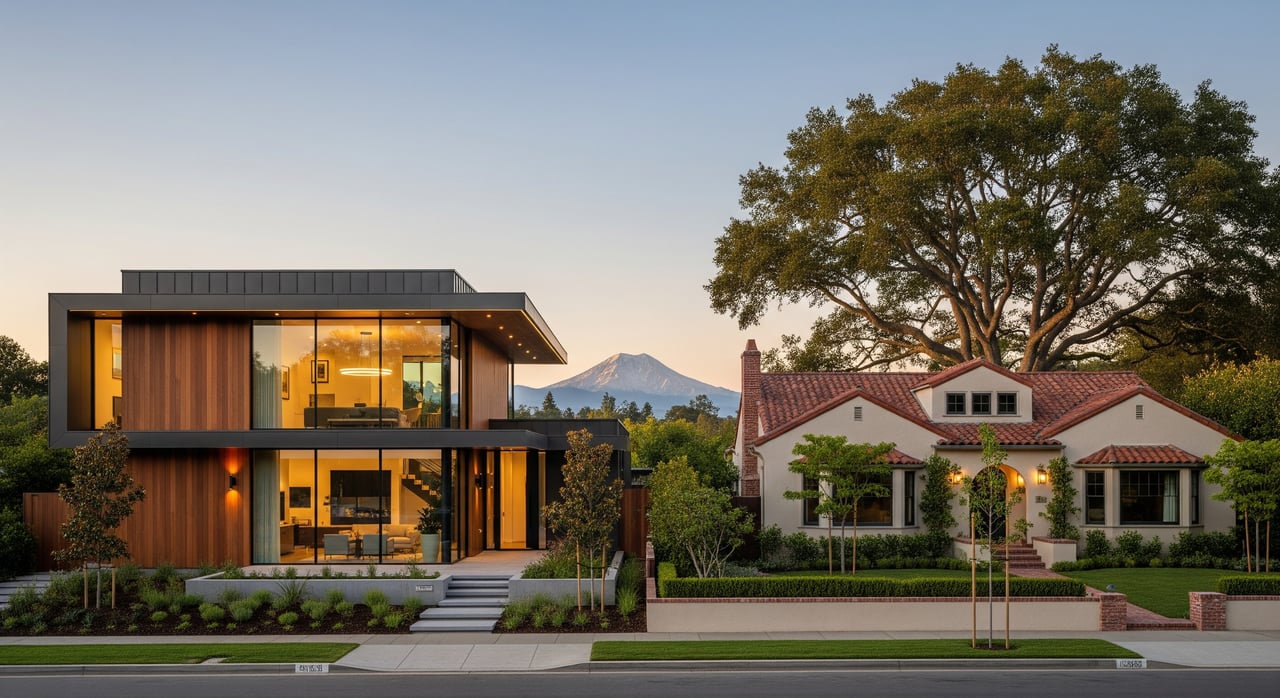
Thinking about a new build or a classic resale in Walnut Creek? You are not alone. With limited land and strong demand, choosing the right path can feel tricky. In this guide, you will see how each option stacks up on price, timeline, maintenance, taxes, insurance, and lifestyle, plus the practical steps to move forward with confidence. Let’s dive in.
Walnut Creek market snapshot
Walnut Creek is a mature East Bay city with a mix of downtown living, transit access, and established single-family neighborhoods. Much of the housing stock is older, with many homes on larger lots and mature landscaping. Because vacant land is scarce and hillside areas face design and environmental limits, most new projects are smaller infill condos, townhomes, or custom tear-down rebuilds. This tight supply keeps prices elevated and makes both proximity to BART and neighborhood amenities highly valued.
New construction: key benefits and tradeoffs
New homes in Walnut Creek are most often infill condominiums and townhomes near downtown and BART, small-lot detached homes, or individual rebuilds on existing lots. You typically pay a premium per square foot for modern layouts, energy-efficient systems, and builder warranties. Short-term maintenance is lower, though condos and townhomes usually include monthly HOA fees for amenities and reserves. Timelines can be longer if you are building from scratch, and appraisals can be challenging when there are few comparable new sales.
Financing may include a standard mortgage for a completed home or construction-to-permanent loans for a ground-up build. Builders sometimes offer incentives such as closing cost credits or rate buydowns. California’s recent code cycles often require rooftop solar and higher energy-efficiency standards, which can make utility costs more predictable. Even with new, it is smart to plan third-party inspections and a thorough punch list before closing.
Resale homes: key benefits and tradeoffs
Resale homes often come with larger lots, mature trees, and established neighborhood character. They can be priced lower per square foot than new construction, though many need updates to kitchens, baths, systems, or landscaping. You will want to budget for inspections and potential upgrades such as seismic strengthening, energy improvements, or HVAC and roof work. Closings are typically faster than a new build, often in 30 to 45 days with financing.
Well-located resale homes near downtown, BART, or community amenities can hold strong long-term value. Many single-family resales do not have HOA fees, which reduces monthly costs, but you may face near-term repairs. Insurance for older homes depends on risk factors like wildfire exposure and seismic considerations, so get quotes early.
Side-by-side comparison
Price and value
- New construction: Often a higher price per square foot for modern design, efficient systems, and warranties; incentives may offset costs in some cycles.
- Resale: Often lower per square foot but may need updates; larger lots and location can support strong value.
Financing and appraisal
- New construction: Construction-to-permanent options or standard loans; limited comps can complicate appraisals.
- Resale: Standard mortgage process with more comparables; appraisals typically align with local sales.
Timeline and complexity
- New construction: Longer if building or waiting on completion; builder contracts and staged closings are common.
- Resale: Faster closings when inspections and appraisal are smooth.
Inspections, defects, and risk
- New construction: Builder warranties are common, but still plan independent inspections and a clear punch list.
- Resale: Full inspection suite recommended; older systems may need repair or replacement.
Maintenance and ongoing costs
- New construction: Lower near-term maintenance; condo and townhome HOAs add monthly fees.
- Resale: Possible lower monthly fees for standalone homes but higher near-term repair costs.
Taxes and assessments
- New construction: Assessed near current market value at completion or sale under Prop 13 rules.
- Resale: Reassessment occurs at purchase; check for any special taxes. Confirm estimates with the county assessor.
Insurance
- New construction: Fire-resilient materials and defensible-space design can help, but location drives underwriting.
- Resale: Insurance varies by wildfire, seismic, and flood exposure; earthquake coverage is separate.
Energy, code, and electrification
- New construction: Built to current codes, often with rooftop solar, strong efficiency, and EV readiness.
- Resale: Upgrades can improve performance over time if you want similar efficiency.
HOA and community governance
- New construction: Condos and townhomes almost always have HOAs with CC&Rs and monthly dues.
- Resale: Single-family homes less often have HOAs, though resale condos do.
Neighborhood character and lifestyle
- New construction: Often near transit in denser settings; appeals if you want modern, low-maintenance living.
- Resale: Larger yards and established streetscapes are common; appeals if you value space and outdoor privacy.
Which option fits you
Choose new construction if you:
- Want modern design, energy efficiency, and predictable systems from day one.
- Prefer low-maintenance living and do not mind HOA fees for shared amenities.
- Are comfortable with a longer timeline or a waitlist for the right unit.
Choose resale if you:
- Want a larger lot, mature landscaping, and established neighborhood character.
- Prefer faster timelines and more comparable sales for appraisal.
- Are open to updates or phased improvements to tailor the home to your needs.
Smart next steps
If you are buying new construction
- Ask the builder for a clear base-price list and upgrade menu, warranty terms, and completion timeline.
- Confirm your right to third-party inspections and the process for punch-list repairs before closing.
- Review HOA documents, CC&Rs, budgets, and reserve studies for condos and townhomes.
- Discuss appraisal contingency and loan options early, including any rate buydowns or incentives.
- Verify solar, EV readiness, and energy features included with the home.
If you are buying resale
- Order full inspections: general, pest/termite, roof, and system checks for HVAC, electrical, and plumbing.
- Verify permits on past renovations or ADUs to avoid lender or insurance issues.
- Price likely updates for kitchens, baths, seismic work, or energy upgrades into your budget.
- Get early quotes for homeowners and earthquake insurance.
If you are selling a resale home
- Highlight strengths: lot size, outdoor space, architectural details, and location near amenities.
- Consider targeted refreshes and staging to compete with new finishes buyers see elsewhere.
- Provide records for roof, HVAC, and other system updates; confirm permits for past work.
Local factors to verify
- Wildfire: If you are near hillside areas, confirm defensible space and check insurance availability and cost.
- Seismic: New builds meet current seismic codes, but earthquake insurance is a separate decision for any home.
- Flood: If you are near creeks, review flood risk and any lender requirements.
- Taxes: Under Prop 13, expect reassessment to near market value at transfer; confirm estimates with the county assessor.
- Special assessments: Some developments include special taxes; review each property’s tax bill and HOA disclosures.
- ADUs: State laws support ADUs, but site conditions and local rules still apply; verify feasibility before you plan one.
Work with a local guide
Choosing between new and resale in Walnut Creek comes down to how you want to live, your budget timing, and your appetite for projects. A local expert can help you weigh tradeoffs by neighborhood, evaluate HOA health, and navigate appraisal, inspections, and insurance. If you want an experienced, calm partner to help you choose the right path and negotiate the best outcome, connect with Liz Gallagher for a free consultation.
FAQs
Are new homes always pricier in Walnut Creek?
- Generally, yes on a per-square-foot basis due to modern finishes and warranties, but location and lot size can make some resale homes worth more overall.
Do new Walnut Creek homes have lower ongoing costs?
- Often in the near term, thanks to efficient systems and fewer repairs, though HOA dues and a higher assessed value can offset savings.
How do appraisals differ for new vs. resale?
- New homes can face appraisal challenges when few comparable sales exist, while resale appraisals usually have more local comps to support value.
What should I inspect with a new build?
- Plan third-party inspections before and after drywall, verify punch-list steps, and review warranty coverage and transferability in detail.
How does Prop 13 affect my purchase?
- Whether new or resale, your property is reassessed near market value at purchase, and future increases are limited by Prop 13 rules.
Does buying new reduce wildfire or earthquake risk?
- Newer codes can improve resilience, but insurance pricing depends heavily on location and the property’s specific risk profile.